On my first day in England, not five minutes from my grandparent’s house, I found a hidden path. It caught the corner of my eye; I crossed the street and started down it.
It was a day of saints: overcast but with the sun making periodic and splendid entrances—shimmering rays bursting through the clouds and traveling earthward, exactly as if they should be illuminating a saint below. It would have been fitting for the magical rays to illuminate the entrance to this riverside road, just like a glowing gateway in a fairy tale.
*
After a long flight, my body craves a run more than it craves sleep. Until I go, I feel claustrophobic and disoriented-- unable to gage where exactly I am. My head clears as I extend my legs, feel the fresh air and peer around at my new surroundings. Running is my way of keeping tabs on the environment around me. I can travel farther than I ever could when walking: I explore, I follow hidden paths. I follow my heart and my feet. My runs prove that there are endless amounts of unknowns in one’s own, familiar environment. I am always finding new things within the small radius that I can cover in an hour on my feet.

The dirt path follows the Stort River, winding away from a busy street and plunging into picturesque English countryside. All was in bloom: the edges of neighboring fields were trimmed in Queen Anne’s lace, nettles and purple, trumpet-like flowers spilled onto the path. In other parts, trim blossoms in the verdant gardens of little cottages were just visible over the fence.
I entered into a dappled region; path shaded by tall trees. A sign told me I was entering Rushy Mead Nature Preserve. I could immediately hear the underbrush rustle with abounding English wildlife. Out of the corner of my eye, I saw a water vole—a creature of Wind and the Willows— plunge into waterside rushes. On the opposite shore, two haughty swans roosted in an overturned rowboat. In the calm waters, geese and green-headed mallards paddled along amicably. Fuzzy, black moorehen, the English water bird that always looks desperate, struggled to keep in line.
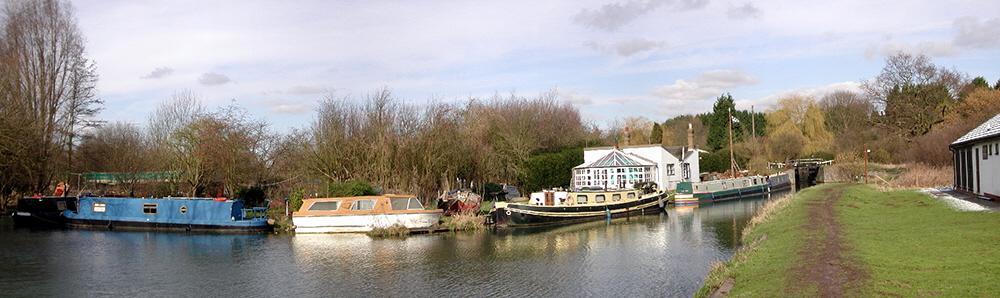
I passed over bridges, water rushing underneath, and passed by slower pools formed by old locks. The shiny metal levers of Southmill Lock 1 and Twyford Lock 2 stood ready for a boatman to crank. Twyford was next to a mill house, a Tudor building where English country folk have harnessed the river to make their bread for centuries. For all I knew, I could have been back in time. The shiny houseboats that bobbed in the water, shiny paint catching the sun, supported this thought. I imagined the roving occupants—still as magical and mysterious as all river people— probably descended from the first Roma to come to Britain. The Moondance, blue with white letters, looked peaceful and I guessed the river people slept inside.

I continued, coming to a gate. Going through, I passed a stable surrounded by fallow fields filled with delicate buttercups which splashed yellow across the green. The path led me under an archway of trees forming a shady portal into another world.
It was fitting: I had entered another world; the ingress only steps from my familiar ground.